

Why Is AI Literacy Important Today?
Most educators already recognise that students use artificial intelligence both in the learning process and in their everyday lives. Therefore, one of the most important tasks of modern schools is to help children understand what artificial intelligence is, how it works, and how it affects the world around them.
However, despite the growing need to integrate AI into education, the lack of clear educational standards, guidelines, and practical approaches makes it difficult for schools and educational institutions to develop a unified strategy.
Today, many discussions about artificial intelligence focus primarily on one question: “How can we control its use?”
This is undoubtedly an important question. Modern technologies have made cheating significantly easier while also making plagiarism more difficult to detect. However, simply restricting the use of AI is not enough.
Technology theorist Douglas Rushkoff emphasises the importance of understanding technology in order to participate fully in modern society:

“In a world that is increasingly shaped by software, you have two choices: to create and control technology yourself, or to become part of a system that controls you. It’s that simple: program, or be programmed.”
The Current State of AI Education in Schools
Today, approaches to teaching artificial intelligence in schools remain fragmented and inconsistent.
In some schools, AI is viewed primarily through the lens of rules and restrictions. In others, it is seen as a tool for improving productivity or as a potential source of academic dishonesty.
Let us examine four key challenges.
1. An excessive focus on using tools at the expense of understanding the technology
Many educational programmes dedicated to artificial intelligence focus on its most visible applications: large language models and AI-powered chatbots.
However, a more sustainable, long-term approach to education involves studying the fundamental principles of artificial intelligence and understanding how it is created, how it works, and how it evolves.
2. Insufficient teacher preparation
Not all educators feel sufficiently confident when teaching topics related to artificial intelligence.
According to research conducted by LEGO® Education among educators from different countries:
- 81% consider the development of AI literacy to be one of the priorities of education.
- However, only 42% feel sufficiently prepared to teach this subject effectively.
- Even among computer science teachers who have received specialised AI training, only 49% feel confident in their ability to teach the subject.
Therefore, the systematic development of AI literacy requires a shared educational infrastructure that includes standards, tried-and-tested curricula, and clear teaching guidelines.
3. Students’ confidence exceeds their actual competencies
According to international research, 79% of teachers believe that students are confident in using artificial intelligence. At the same time, 63% of educators report that children’s level of competence in this area is insufficient.
When a child understands artificial intelligence solely as a process of “entering a prompt and receiving the correct answer”, they become vulnerable to:
- Algorithmic bias.
- Unreliable information.
- Incorrect answers.
- Uncritical acceptance of AI-generated results.
4. The education system is struggling to keep pace with technological change
Schools need to adapt to the rapid development of technology. However, this process is accompanied by uncertainty and a lack of consistent approaches.
What Should an Effective AI Literacy System Look Like?

If AI education in many schools today is fragmented and primarily reactive, it is time to move towards a more consistent, purposeful, and long-term strategy.
The main goal is not simply to teach children how to use individual artificial intelligence tools or to establish rules for their use.
It is essential to develop students’ knowledge and understanding of:
- How AI works.
- The capabilities and limitations of technology.
- The different fields in which artificial intelligence is used.
- Potential risks.
- The principles of safe and responsible use.
As Andrew Sliwinski, Head of User Experience at LEGO® Education, explains:
Young children often perceive artificial intelligence as a kind of magic box: you enter a prompt, and it produces an image, a video, or an answer.
However, artificial intelligence is not magic; it is technology.
Therefore, the goal of AI education is not only to teach children how to use this “box”, but also to give them the tools to understand what happens inside it and to create their own technological solutions.
An effective AI education system should include three key areas.
1. Well-prepared and confident educators
The effective development of AI literacy begins with educators who have the necessary knowledge and confidence in their ability to organise the learning process.
2. Prioritising fundamental technical knowledge
High-quality AI education should prepare students not only to use technology but also to create it independently.
To achieve this, students need to develop a strong foundation in computer science, including:
- Algorithms.
- Data representation and processing.
- Abstract thinking.
- Machine learning.
This knowledge provides a long-term educational foundation that remains relevant regardless of the emergence of new platforms and tools.
3. Empowerment and opportunities instead of fear and restrictions
A cautious approach to AI is justified. However, warnings and restrictions should not replace education. It is important to develop children’s independent and creative thinking, curiosity, and confidence in their own abilities by giving them opportunities to experiment safely with AI, ask questions, and make mistakes.
The main task of educators is to teach students to understand when to rely on their own thinking, when to turn to their peers, and when to use AI — while remaining in control of the technology.
How Can We Move from Theory to Practice?
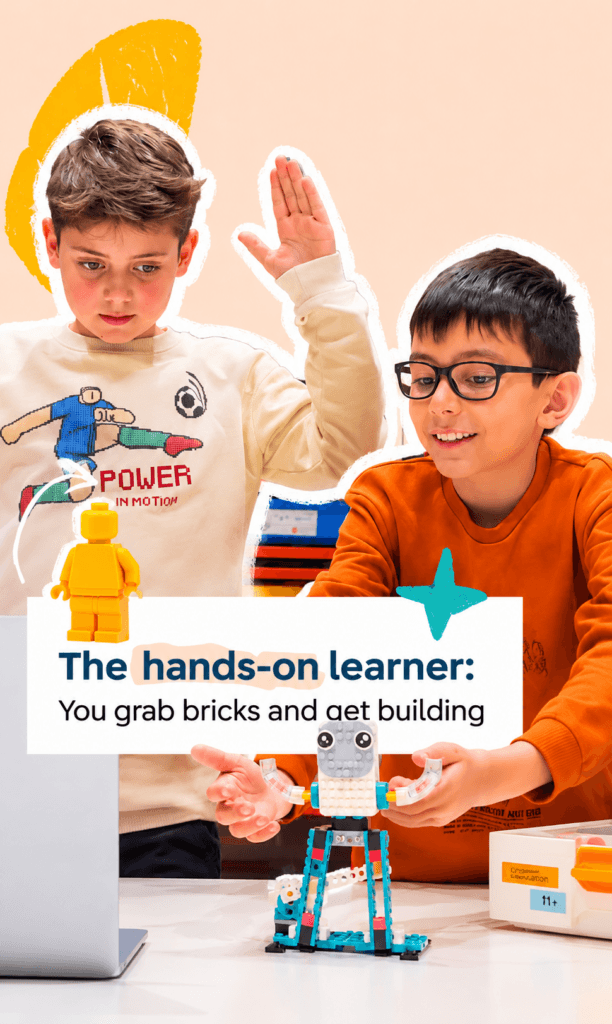
Once a general understanding of an effective AI literacy system has been established, the next question is what specific changes need to be implemented at the classroom, school, and educational institution levels.
The development of AI literacy cannot be achieved through administrative instructions alone. It requires support for educators, well-considered educational decisions, and the establishment of shared confidence in the chosen approach.
- Preparing teachers to teach AI, not just to control its use.
- Developing educational policies that go beyond defining acceptable ways to use AI.
- Building AI literacy on a foundation of computer science.
- Starting education early and developing competencies progressively.
- Providing practical, collaborative, and accessible learning experiences.
The Role of LEGO® Education in Developing AI Literacy
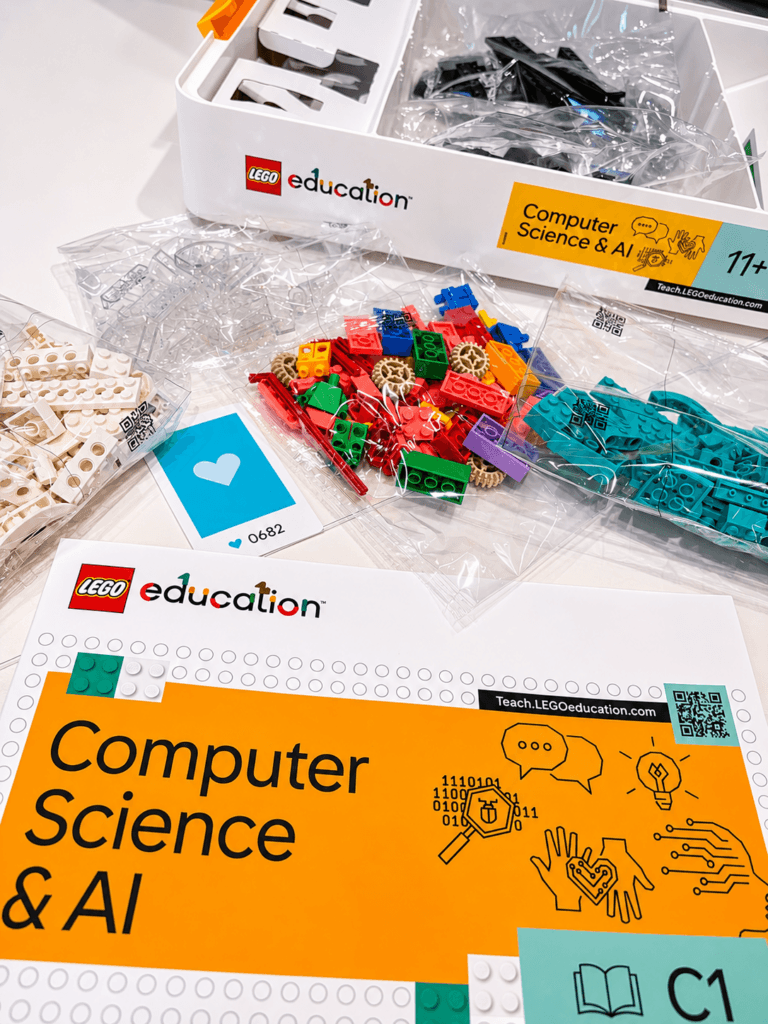
LEGO® Education supports the development of AI literacy through hands-on educational solutions that are tailored to students’ developmental stages.
The company’s goal is to make learning about artificial intelligence safer, more tangible, more collaborative, and more accessible for both educators and children.
LEGO® Education’s learning solutions focus on three key areas.
1. A hands-on and collaborative approach to learning
Using tangible models and teamwork helps students better understand complex technological concepts.
This approach transforms learning about artificial intelligence from the passive reception of information into an active learning process.
2. Safety, privacy, and transparency
Protecting children’s data and ensuring transparency in how technologies work are essential elements of the educational process.
Clear rules for processing personal data, an understanding of what data is used by models, and transparency about the origins of the data they use all help create a safe learning environment.
3. Strengthening educators’ professional confidence
LEGO® Education’s learning solutions are designed with teachers’ needs in mind.
They help educators feel better prepared to teach artificial intelligence and more confident in organising the learning process.
What Opportunities Does the Development of AI Literacy Create?

When schools develop an effective system for teaching artificial intelligence, the result is more than simply improving students’ ability to use technology.
It also promotes student independence, strengthens educators’ professional readiness, and helps educational institutions introduce technological innovations thoughtfully, without allowing them to replace fundamental educational goals.
AI literacy is a combination of knowledge, skills, and attitudes that enables individuals to:
- Understand how artificial intelligence works.
- Critically evaluate its capabilities and limitations.
- Apply AI creatively to develop innovations and solve problems in a variety of technological and real-world contexts.
Key Outcomes of Developing AI Literacy
1. Building students’ confidence — developing their ability to analyse, evaluate, and consciously influence the development of artificial intelligence, both today and in the future.
2. Preparing competent educators — developing their ability to create clear learning pathways and engage students effectively in the learning process.
3. Moving educational institutions towards a strategic approach — implementing technology based on a thoughtful and consistent strategy, rather than simply reacting to problems after they arise.
4. Integrating AI literacy into the broader education model — creating an educational system designed to prepare students for the demands of the future.
Source: LEGO® Education — Building AI Literacy in Schools: Moving from Mystery to Mastery.